

5-Axis CNC Machining Services
Precision Manufacturing for Complex Prototypes and Production Parts
High-precision 5-axis CNC machining services for complex functional prototypes, low-volume production, and end-use components. Multi-surface machining in a single setup improves feature alignment, reduces repositioning errors, and turns demanding designs into accurate, manufacturable parts.
Key Capabilities
- Tight tolerances down to ±0.01 mm
- Complex geometries and multi-surface features
- Prototypes, low-volume production, and end-use parts

Request a Quote
Explore Our Capabilities
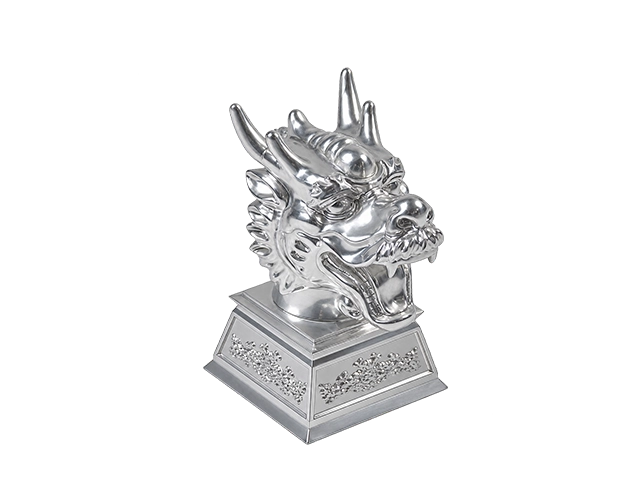

5-Axis

Advanced Multi-Axis Capability
±0.01mm
Achievable Tolerance
40M+
Parts Delivered
20+
Engineering Materials Machined
5-Axis CNC Machining Capabilities
Our CNC machining services are built around core processes that cover most functional and production-grade requirements, from simple precision parts to complex multi-axis components.
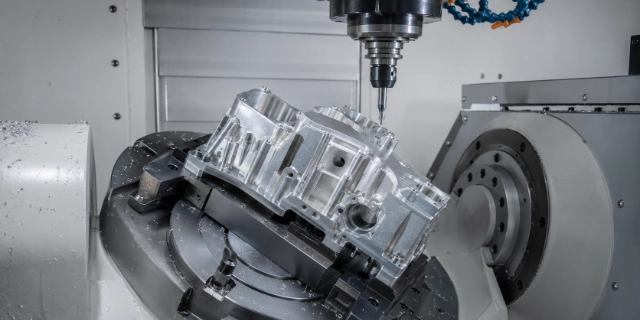
Multi-Surface Machining
Machine angled faces, side features, pockets, and compound geometries with fewer setups.
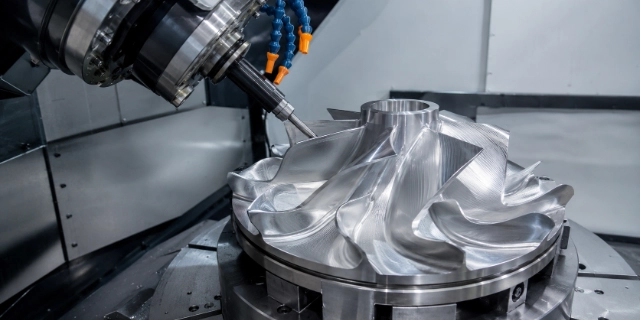
Complex Contour Machining
Produce curved profiles, transitions, recessed areas, and continuously changing surfaces.
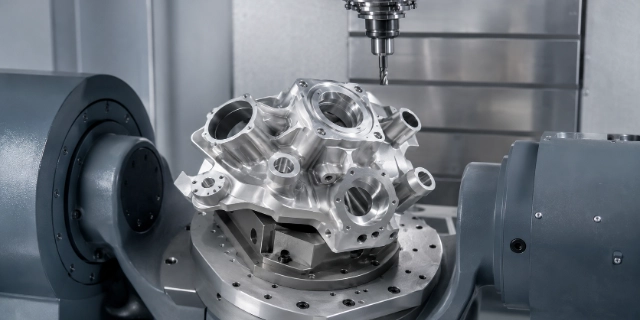
Multi-Directional Feature Alignment
Control bores, interfaces, and mounting features relative to shared datums across multiple orientations.
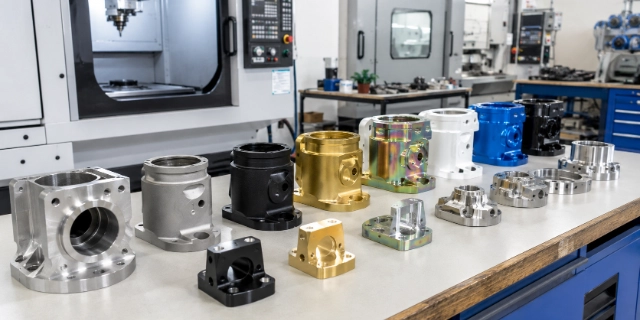
Integrated Machining and Finishing
Coordinate precision machining with polishing, passivation, anodizing, plating, and painting.
Typical Parts for Five-Axis Machining
Five-axis machining is commonly selected when conventional three-axis setups cannot efficiently reach all features or maintain the required positional relationships between multiple faces.
Request a Quote
Complex Housings and Multi-Port Valve Bodies
These parts feature deep cavities, intersecting passages, side openings, angled interfaces, and mounting surfaces distributed across multiple directions. Five-axis machining can complete more features in one setup, improving positional accuracy between bores, sealing surfaces, and internal channels while reducing repeated clamping.


Impellers, Rotors, and Complex Curved Components
This category includes impellers, turbine-style components, rotors, conical parts, and other components with continuously changing curved surfaces. Simultaneous five-axis machining allows the cutting tool to maintain a suitable angle to the surface, supporting smoother finishes, improved blade consistency, and better access to recessed areas.


Multi-Angle Brackets and Spatial Connecting Parts
These components have arms, bosses, inclined holes, curved transitions, and mounting features positioned at different angles. Five-axis or 3+2 machining reduces repositioning, improves alignment between multiple faces, and makes it easier to machine difficult-to-access areas and compound-angle features.


Materials for Five-Axis Machining
We machine aluminum, stainless steel, steel, titanium, brass, copper, zinc alloy, and selected engineering plastics. Material selection is evaluated according to machinability, rigidity, thermal stability, surface-finish requirements, and component application.
Explore Material Guide



Tolerance Control in Five-Axis Machining
Five-axis tolerances are assigned according to part function, datum relationships, material stability, feature accessibility, and inspection requirements. Critical bores, mating surfaces, and multi-directional features may receive tighter tolerances, while non-functional surfaces use practical manufacturing tolerances.

Datum Strategy
Establish shared datums for features machined from different orientations.

Critical Feature Control
Apply tighter tolerances to bores, mating surfaces, and locating features.

Geometry Evaluation
Consider thin walls, deep pockets, tool reach, and component rigidity.

Material Stability
Account for thermal expansion, residual stress, and deformation during machining.
| Category | Standard | Precision Option | Design Guidance |
| General Five-Axis Features | ±0.05 mm | ±0.02 mm | Use standard tolerances for non-critical surfaces and cosmetic features |
| Angled Faces and Multi-Surface Features | ±0.03–0.05 mm | ±0.01–0.02 mm | Define a clear datum system for features machined from different orientations |
| Bores, Bosses, and Mating Interfaces | ±0.02 mm | Up to ±0.01 mm | Apply tighter tolerances where components locate, align, or assemble |
| Complex Contours and Curved Surfaces | ±0.05 mm | ±0.02 mm | Use profile tolerances instead of over-dimensioning individual points |
| Aluminum and Steel Components | ±0.02–0.05 mm | ±0.01 mm for selected features | Stable metals generally support tighter feature-based tolerances |
| Engineering Plastics | ±0.05–0.10 mm | Approximately ±0.03 mm | Consider thermal expansion, deformation, and residual stress |
| Thin Walls and Deep Pockets | Case-dependent | Defined during DFM review | Rigidity, tool reach, vibration, and clamping influence final accuracy |
| Long-Reach or Restricted-Access Features | Case-dependent | Defined during process planning | Tool length and cutting angle must be evaluated before tolerance confirmation |
Actual five-axis machining tolerances are confirmed during DFM review based on material, geometry, datum strategy, feature accessibility, and inspection requirements.
- Single-setup machining can improve alignment between features on multiple faces.
- Deep pockets and long-reach features may require wider tolerances because of tool deflection.
- Metals typically provide more stable dimensional control than engineering plastics.
- Critical bores, mating surfaces, and positional relationships should be identified clearly on the drawing.
Surface Finishing Options for CNC Parts
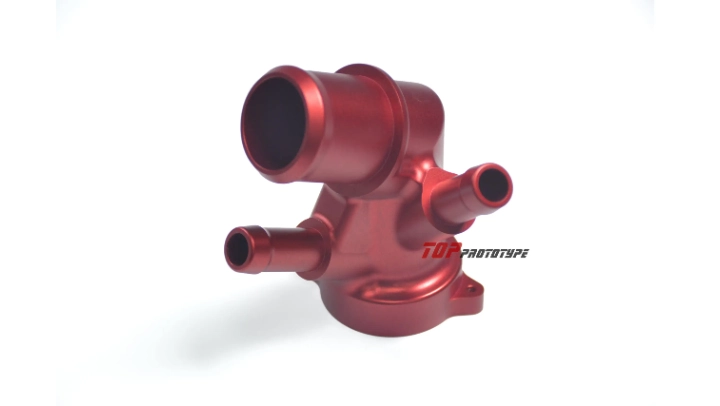
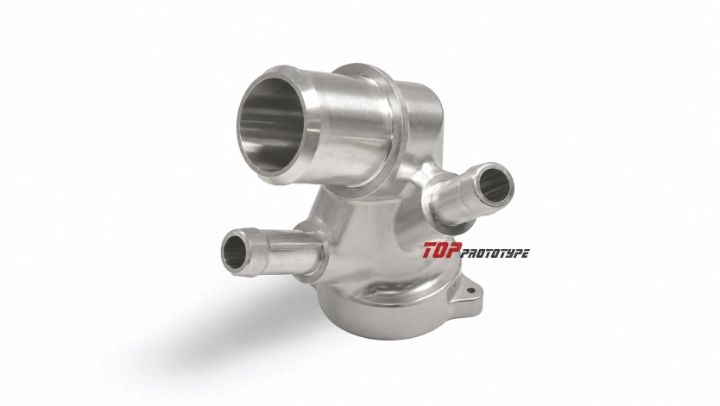
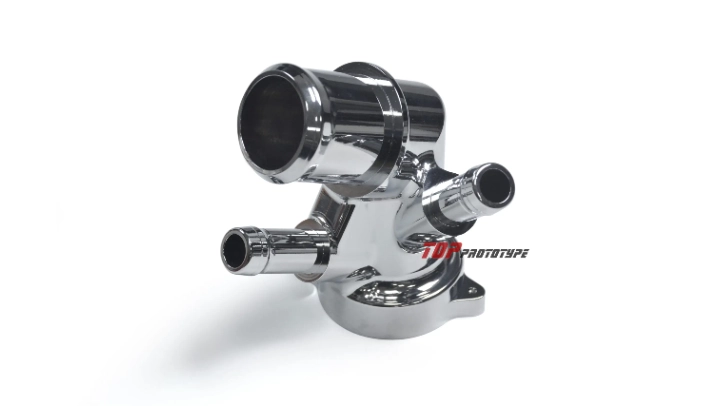
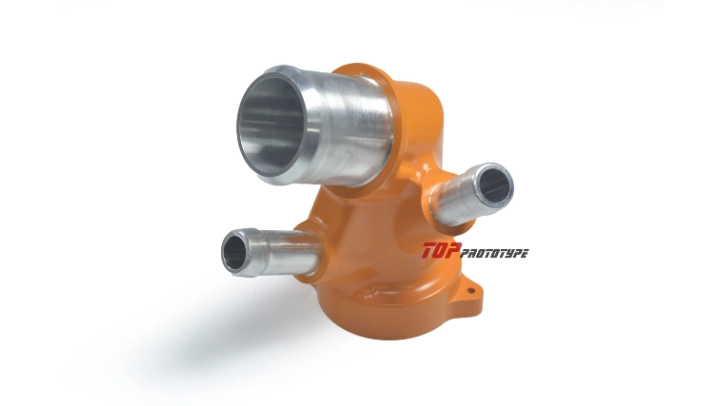

Surface finishes are selected based on functional needs, appearance requirements, and part usage — not just aesthetics.
Explore Surface Finishing Guide
Ready to Validate Your Five-Axis CNC Design?
Share your CAD files with our engineers and receive manufacturability feedback, tolerance recommendations, process planning, and a fast quotation before production begins.
-

Design-for-manufacturing review by experienced CNC engineers
-
Datum, feature-access, and multi-surface machining evaluation
-
Material, tolerance, and surface-finishing recommendations
-
Fast quotation for prototypes and low-volume production
Why TOP Prototype for 5-Axis CNC Machining

Dedicated Multi-Axis Equipment
Five-axis positioning and multi-axis linkage support complex, multi-directional components.

Documented Project Experience
Completed projects include SUS316L and zinc-alloy components with accuracy around ±0.05 mm.

ISO 9001 Quality Management
Defined quality procedures support dimensional verification and consistent production.

Integrated Project Coordination
Machining, inspection, surface finishing, confidentiality, and delivery can be managed within one workflow.
5-Axis CNC Machining Frequently Asked Questions
-
What parts are suitable for 5-axis CNC machining?

-
Five-axis machining is suitable for components with angled faces, curved surfaces, deep cavities, and features located on multiple sides.
-
What materials has TOP Prototype machined using five-axis equipment?
-
Documented projects include SUS316L stainless steel and zinc-alloy components processed with Qiao Feng five-axis equipment.
-
What accuracy can TOP Prototype achieve?
-
The documented five-axis cases report machining accuracy of approximately ±0.05 mm. Final tolerances depend on material, geometry, datum design, and feature requirements
-
What five-axis equipment does TOP Prototype use?
-
The company profile lists Qiao Feng five-axis equipment with four-axis linkage capability for complex component machining.
-
Can TOP Prototype produce five-axis prototypes?
-
Yes. TOP Prototype provides rapid prototyping and precision-parts manufacturing for design verification and functional testing.
-
Is five-axis machining available for low-volume production?
-
Yes. The company supports both prototype development and flexible low-volume manufacturing for customized components.
-
What surface finishes are available?
-
Documented five-axis examples include passivation for SUS316L stainless steel and smooth polishing for zinc-alloy parts.